Ana Jiménez Pastor

The integration of AI technology into the field of radiology has sparked a revolution in medical imaging data. This post explores AI’s manifold benefits of AI in radiology, showcasing its wide-ranging applications and how it enhances every aspect of the radiology workflow.
Remarkable strides in AI technology have transformed the radiology workflow, offering significant benefits of AI in radiology across various stages: from image acquisition to final diagnosis. These AI-driven enhancements facilitate faster, higher-quality acquisitions, revolutionize the patient experience, and simplify the radiologist’s workload.
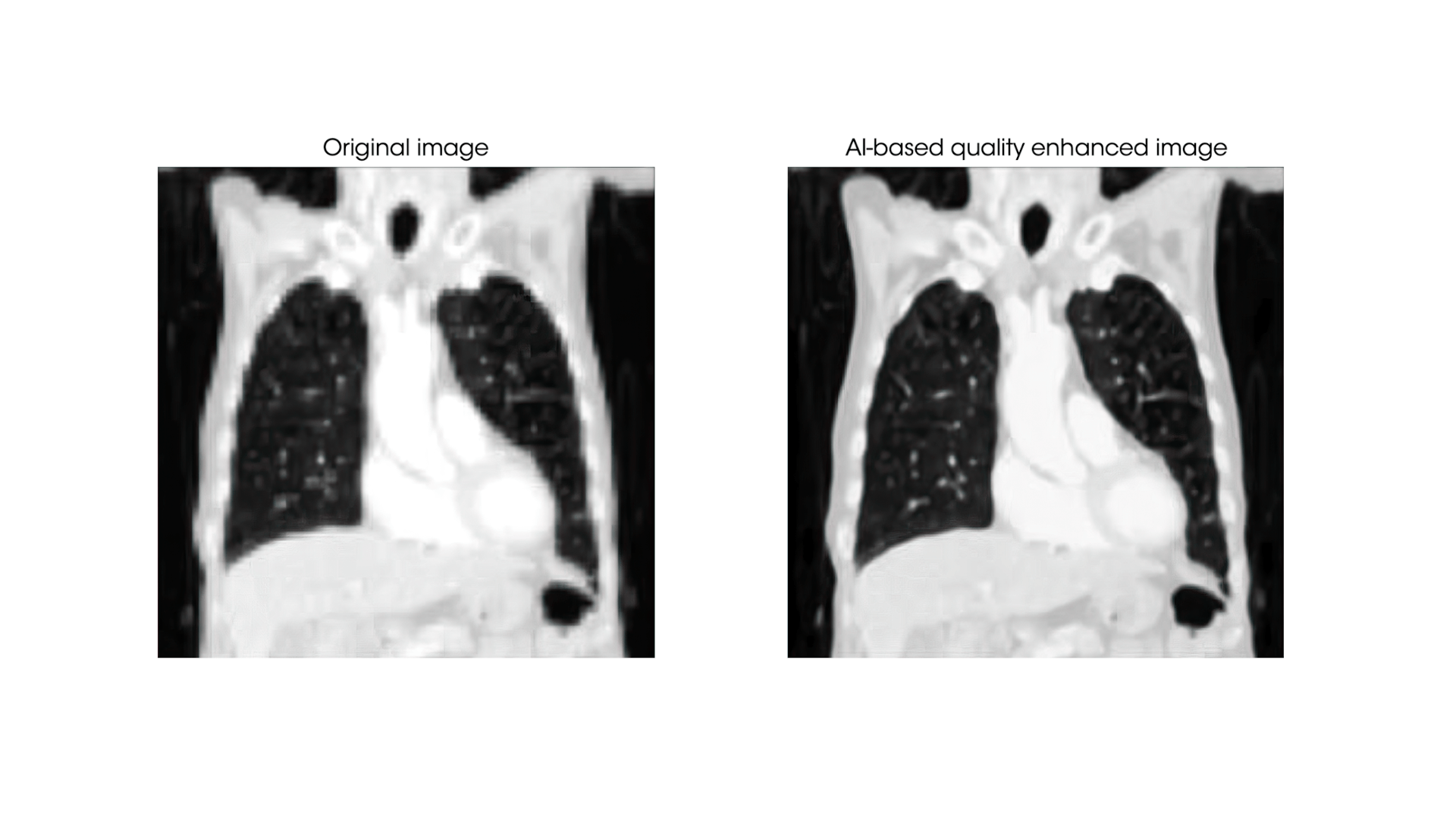
One of the primary benefits of AI in radiology is its ability to accelerate image acquisition while preserving and often enhancing image quality. We can acquire data more swiftly by utilizing AI, mitigating issues like motion artifacts caused by patient movement. This ensures a more comfortable patient experience and yields images of higher quality, optimizing diagnostic accuracy.
The efficiency gained in image acquisition, however, presents new challenges. Radiology departments now contend with larger volumes of images to report. Thanks to AI in radiology, this workflow can be enhanced thanks to different solutions.
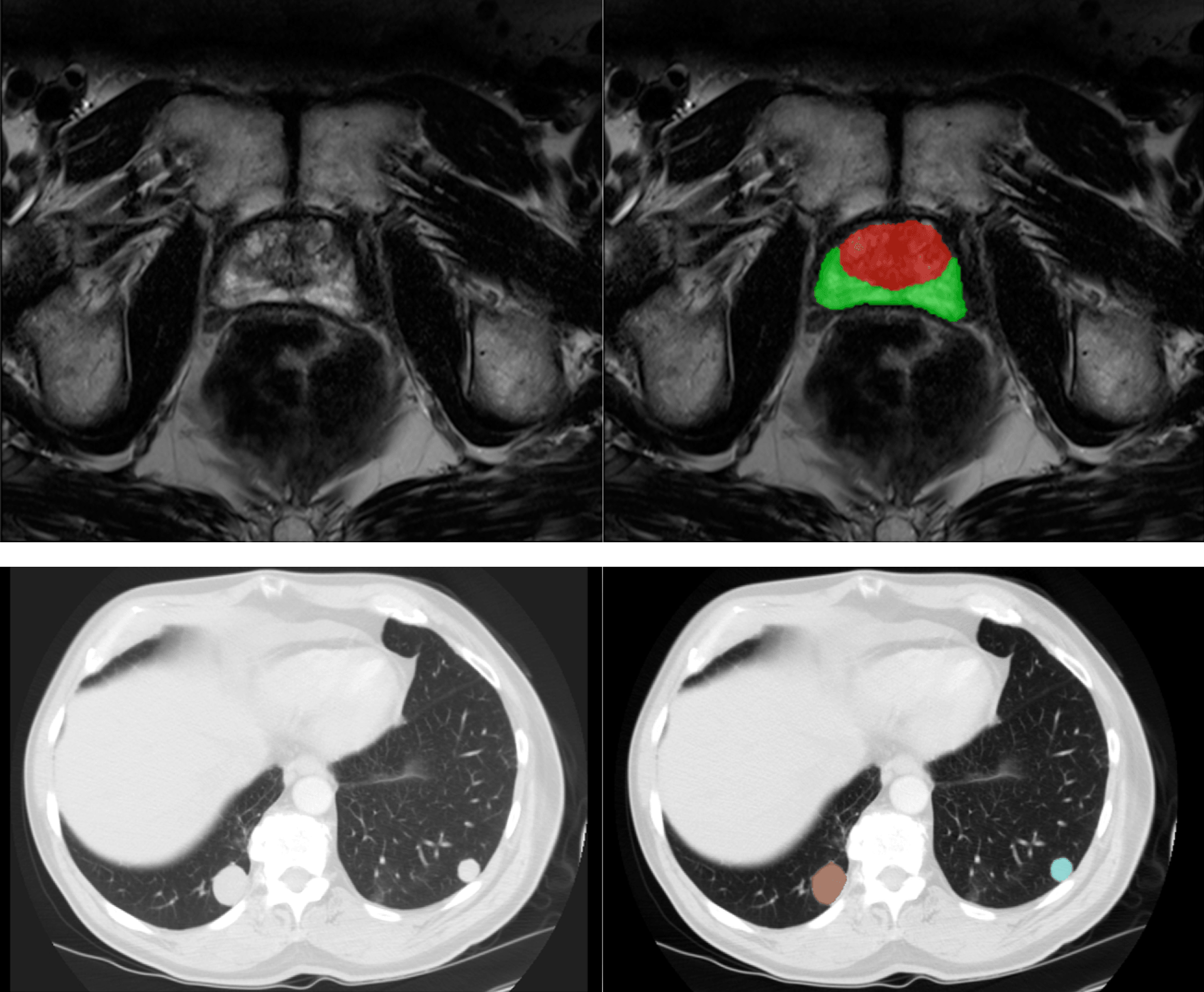
While AI’s role in diagnosing medical conditions is transformative, its impact extends into prognosis. In this domain, radiomics is emerging as a powerful tool for predicting clinical endpoints and patient outcomes.
Radiomics is a multidisciplinary field that extracts quantitative information from medical images. It delves deep into the textures, shapes, and other intricate patterns within images that are often invisible to the human eye. This extracted data, known as radiomic features, holds crucial insights into disease characteristics and progression.
The potential of radiomics in prognosis is broad:
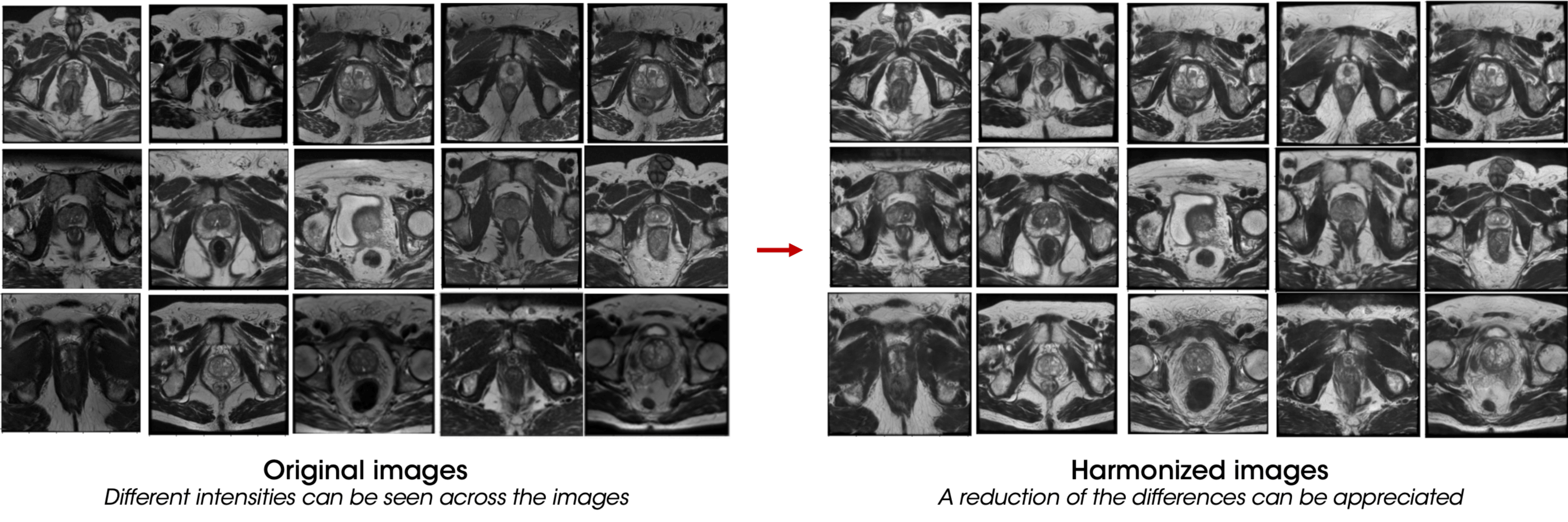
To build robust prognostic models, collecting data from various institutions is essential, considering as much variability as possible. However, the main challenge in multi-centric imaging studies lies in the heterogeneity of scanners and acquisition protocols. To address this limitation, harmonization tools are essential. AI in radiology has shown promising results in this field8, effectively reducing the variabilities commonly encountered in datasets acquired from different scanners.
Yet, the full potential of personalized medicine emerges when radiomics integrates with multiple data sources, including genomics, blood tests, and clinical data, among others. This synergy provides a comprehensive understanding of a patient’s condition, enabling the creation of personalized prognostic models. These models consider the unique biological characteristics of each patient, facilitating tailored treatment plans that are precise and effective.
While the benefits of AI in radiology have already revolutionized the field, several challenges and opportunities remain as the technology continues to evolve. Addressing these challenges will be key to unlocking the full potential of AI in radiology and ensuring its widespread adoption.
Looking ahead, the benefits of AI in radiology are set to expand across various areas:
In conclusion, the future benefits of AI in radiology holds immense potential to enhance patient care further. Overcoming challenges and steering the field toward ethical, safe, and effective use of AI will require collective effort and innovation. The future promises a healthcare landscape where AI, in synergy with human expertise, enables more accurate diagnoses, personalized treatments, and improved patient outcomes.
Jimenez-Pastor A, Alberich-Bayarri A, Lopez-Gonzalez R, Marti-Aguado D, França M, Bachmann RSM, Mazzucco J, Marti-Bonmati L. Precise whole liver automatic segmentation and quantification of PDFF and R2* on MR images. Eur Radiol. 2021 Oct;31(10):7876-7887. Epub 2021 Mar 25. PMID: 33768292.
Jimenez-Pastor A, Lopez-Gonzalez R, Fos-Guarinos B, Garcia-Castro F, Wittenberg M, Torregrosa-Andrés A, Marti-Bonmati L, Garcia-Fontes M, Duarte P, Gambini JP, Bittencourt LK, Kitamura FC, Venugopal VK, Mahajan V, Ros P, Soria-Olivas E, Alberich-Bayarri A. Automated prostate multi-regional segmentation in magnetic resonance using fully convolutional neural networks. Eur Radiol. 2023 Jul;33(7):5087-5096. Epub 2023 Jan 24. PMID: 36690774.
Lång K, Josefsson V, Larsson AM, Larsson S, Högberg C, Sartor H, Hofvind S, Andersson I, Rosso A. Artificial intelligence-supported screen reading versus standard double reading in the Mammography Screening with Artificial Intelligence trial (MASAI): a clinical safety analysis of a randomized, controlled, non-inferiority, single-blinded, screening accuracy study. Lancet Oncol. 2023 Aug;24(8):936-944. PMID: 37541274.
Baltruschat I, Steinmeister L, Nickisch H, Saalbach A, Grass M, Adam G, Knopp T, Ittrich H. Smart chest X-ray worklist prioritization using artificial intelligence: a clinical workflow simulation. Eur Radiol. 2021 Jun;31(6):3837-3845. Epub 2020 Nov 21. PMID: 33219850; PMCID: PMC8128725.
Marti-Bonmati L, Cerdá-Alberich L, Pérez-Girbés A, Díaz Beveridge R, Montalvá Orón E, Pérez Rojas J, Alberich-Bayarri A. Pancreatic cancer, radiomics and artificial intelligence. Br J Radiol. 2022 Sep 1;95(1137):20220072. Epub 2022 Jun 28. PMID: 35687700.
Herrero Vicent C, Tudela X, Moreno Ruiz P, Pedralva V, Jiménez Pastor A, Ahicart D, Rubio Novella S, Meneu I, Montes Albuixech Á, Santamaria MÁ, Fonfria M, Fuster-Matanzo A, Olmos Antón S, Martínez de Dueñas E. Machine Learning Models and Multiparametric Magnetic Resonance Imaging for the Prediction of Pathologic Response to Neoadjuvant Chemotherapy in Breast Cancer. Cancers (Basel). 2022 Jul 19;14(14):3508. PMID: 35884572; PMCID: PMC9317428.
Nan Y, Ser JD, Walsh S, Schönlieb C, Roberts M, Selby I, Howard K, Owen J, Neville J, Guiot J, Ernst B, Pastor A, Alberich-Bayarri A, Menzel MI, Walsh S, Vos W, Flerin N, Charbonnier JP, van Rikxoort E, Chatterjee A, Woodruff H, Lambin P, Cerdá-Alberich L, Martí-Bonmatí L, Herrera F, Yang G. Data harmonization for information fusion in digital healthcare: A state-of-the-art systematic review, meta-analysis and future research directions. Inf Fusion. 2022 Jun;82:99-122. PMID: 35664012; PMCID: PMC8878813.